
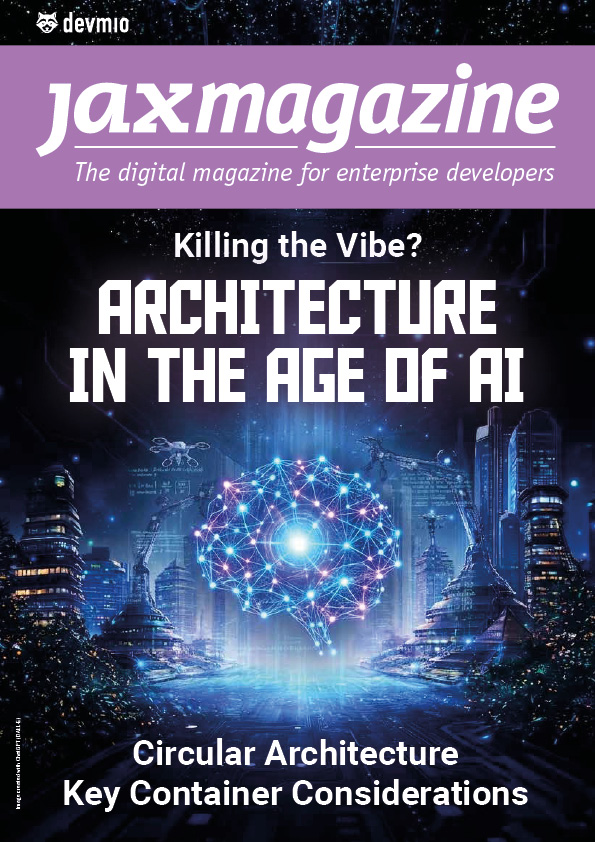
Is your software architecture surviving the shift to AI-assisted coding?
Get practical enterprise frameworks to secure AI workflows, decouple architectures, and optimize your container deployments.
What’s inside:
Tame “Vibe Coding”: Enforce strict guardrails and explicit contexts.
Decouple Systems: Isolate core logic via Circular Architecture and independent APIs.
Optimize Containers: Master the 7 metrics for peak base image security and performance.
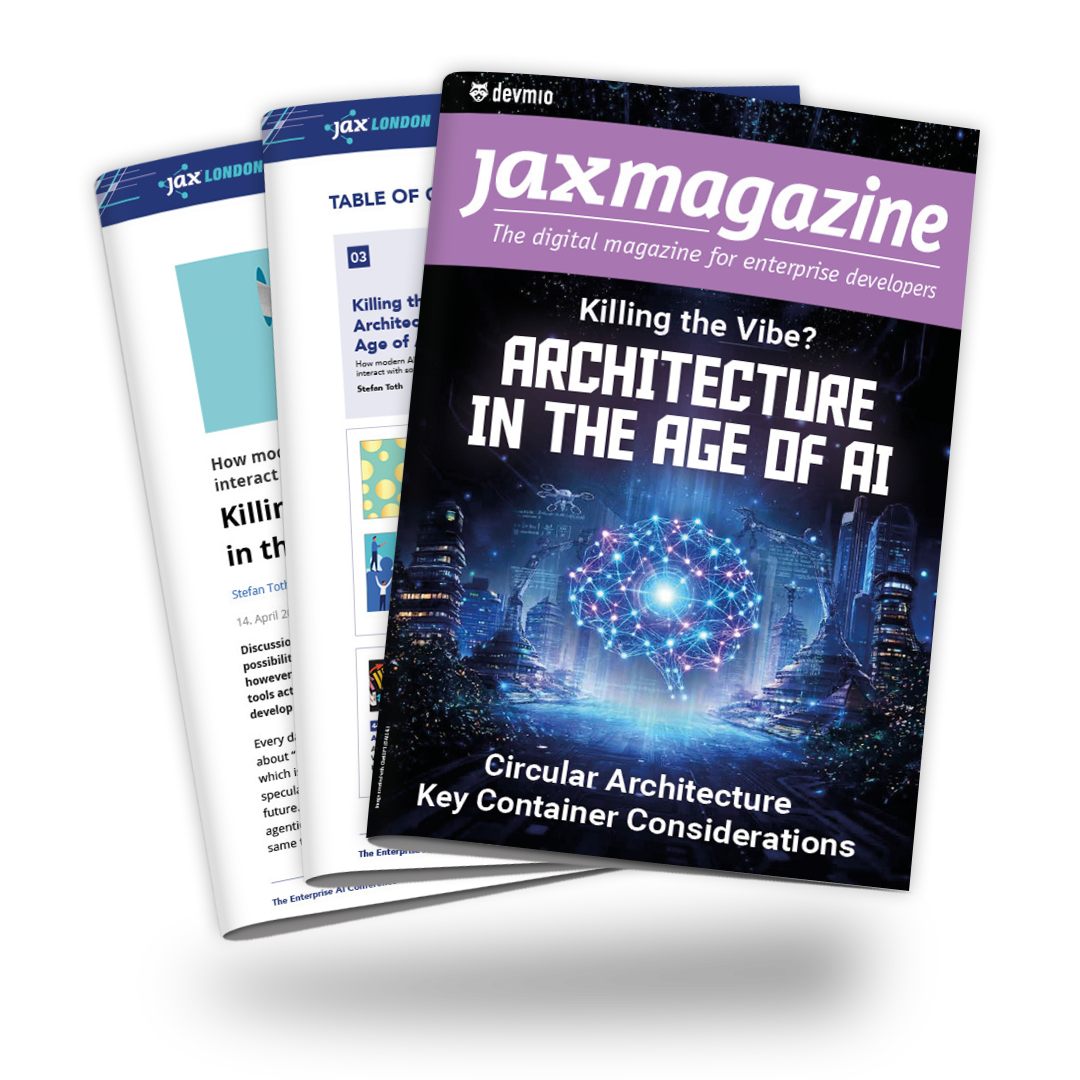
Inside the Magazine
-
- Killing the Vibe? Architecture in the Age of AI
How modern AI tools are reshaping how we interact with software - Practical Advice For Circular Architecture
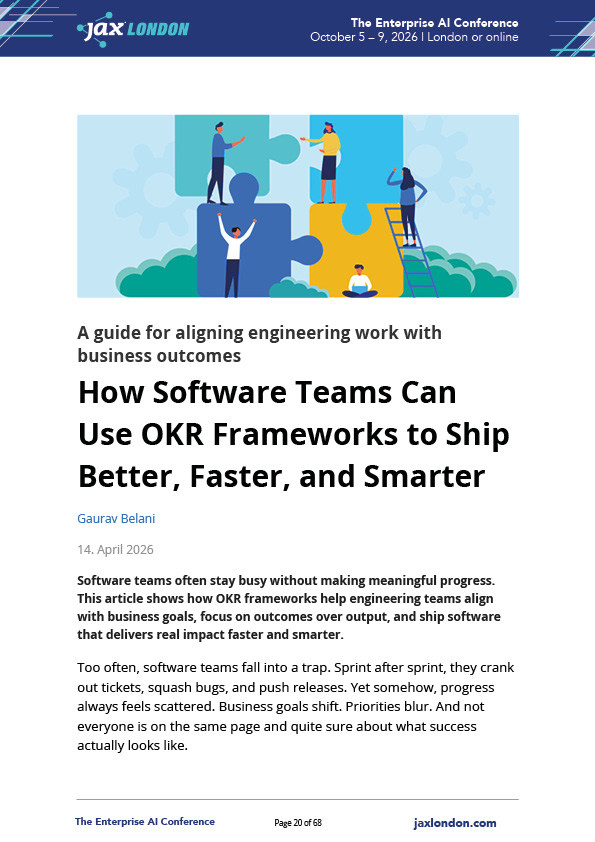
Translating the theoretical concepts to code - How Software Teams Can Use OKR Frameworks to Ship Better, Faster, and Smarter
A guide for aligning engineering work with business outcomes - Why APIs Should Be Designed Independently
APIs: Fundamentals on the Web – Part 1 - 7 Key Considerations for Choosing Container Base Images for Java Apps
Achieve optimal performance, security, and cost efficiency - Approaches to API Design
APIs: Fundamentals on the Web – Part 2 - API Anti-Patterns
APIs: Fundamentals on the Web – Part 3 - How Standards Help With API Design
APIs: Fundamentals on the Web – Part 4
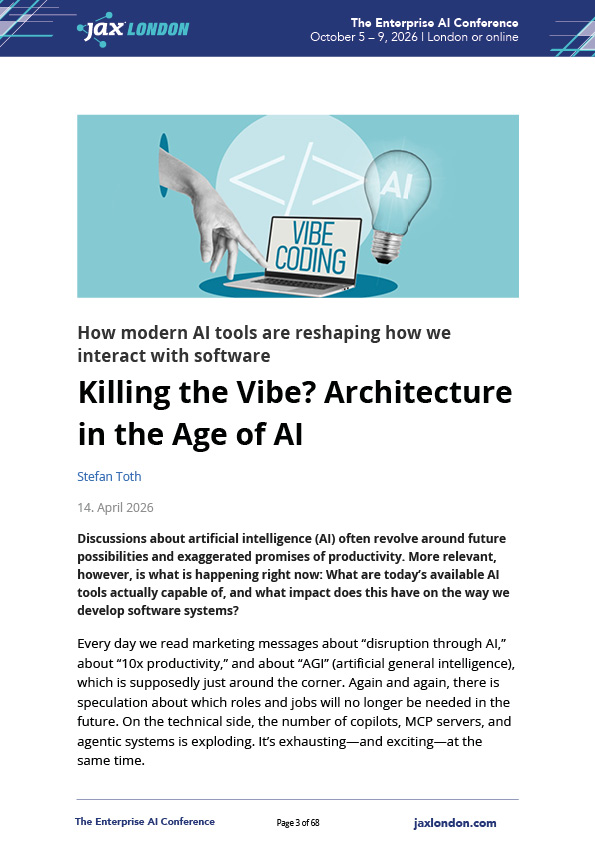
- Killing the Vibe? Architecture in the Age of AI
🔍 Frequently Asked Questions (FAQ)
What is vibe coding in AI-assisted software development?
Vibe coding is an informal development style where developers use AI tools quickly and pragmatically, often prioritizing rapid progress over design discipline. The article describes it as a “flow state” in which AI-generated answers, scripts, or implementations are used directly. It can be useful in experimental or low-risk contexts but is not the full professional potential of AI-assisted development.
How does AI-assisted development differ from traditional quick hacks?
The magazine explains that vibe coding is not entirely new; similar practices existed before AI under labels such as “quick hack” or “accidental architecture.” What changes with AI is the speed and accessibility of producing code, prototypes, and implementation variants. Professional AI-assisted development requires separating the careless attitude from the technical possibilities of LLM-supported tools.
What are the main approaches to AI-assisted software development?
The magazine identifies three main approaches: conversational programming, prompt-driven development, and agentic development. Conversational programming uses dialogue with an LLM, prompt-driven development converts natural language specifications into code, and agentic development delegates tasks to autonomous agents. Each approach has useful scenarios but also limitations around consistency, autonomy, and control.
Does AI replace software architecture?
No. The magazine concludes that software development remains a deep engineering discipline even with AI support. AI changes how architects and developers work, but it does not remove the need for architectural thinking. Instead, architecture becomes more explicit, continuous, and focused on guiding AI-assisted development safely.
How can AI support traditional software architecture tasks?
The magazine states that AI agents are useful for architecture “meta-tasks” that require broad context and analysis. Examples include gap analysis, documentation support, reviews, detecting inconsistencies, evaluating technologies, and analyzing code or monitoring data. However, the article cautions that not every architecture task should be replaced directly by AI agents.
